Die vorliegende Übersetzung wurde maschinell erstellt. Im Falle eines Konflikts oder eines Widerspruchs zwischen dieser übersetzten Fassung und der englischen Fassung (einschließlich infolge von Verzögerungen bei der Übersetzung) ist die englische Fassung maßgeblich.
Ermittlungsagent bei Amazon OpenSearch Service
Der Investigation Agent ist ein zielorientierter Agent für eingehende Recherchen in der OpenSearch Benutzeroberfläche, der komplexe Probleme in Ihrem Namen selbstständig untersucht. Er plant anhand Ihrer Daten und des angegebenen Ziels, führt Abfragen und Analysen durch und führt Analysen durch und erstellt in einem mehrstufigen Arbeitsablauf Nachforschungen. Wenn die Untersuchung abgeschlossen ist, in der Regel innerhalb weniger Minuten, werden strukturierte Hypothesen generiert, die nach Wahrscheinlichkeit geordnet sind und jeweils durch Datenbeweise untermauert werden. Sie bietet volle Transparenz bei jedem Schritt der Argumentation, sodass Sie die Ergebnisse überprüfen und ihnen vertrauen können.
Beginn einer Untersuchung
Sie können eine Untersuchung auf zwei Arten starten:
-
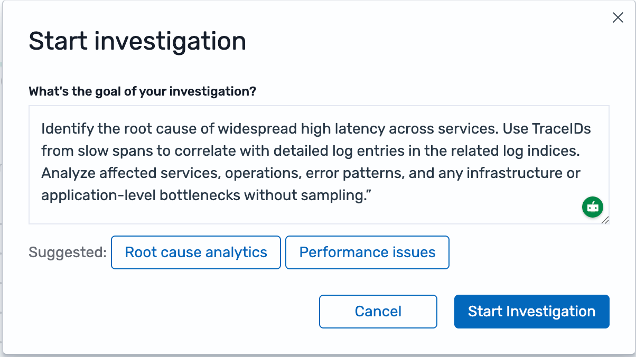
Wählen Sie auf den Seiten Discover, Visualization oder anderen unterstützten Funktionen die Schaltfläche Untersuchung starten aus. Es wird ein Dialogfeld angezeigt, in dem Sie Ihr Untersuchungsziel eingeben und aus vorgeschlagenen Vorlagen wie „Ursachenanalyse“ oder „Leistungsprobleme“ auswählen können.
-
Geben Sie im Agentic Chat den
/investigateSlash-Befehl mit Ihrem Ermittlungsziel in die Chat-Eingabe ein.
Weitere Informationen zu Agentic Chat finden Sie unter. Agenten-Chat bei Amazon Service OpenSearch
Überprüfung der Untersuchungsergebnisse
Nach Abschluss der Untersuchung legt der Ermittlungsbeauftragte eine Primärhypothese mit einem Vertrauensniveau und unterstützenden Beweisen vor. Auf der Ergebnisseite werden die unternommenen Untersuchungsschritte, die relevanten Ergebnisse nach Wichtigkeit geordnet und alternative Hypothesen angezeigt.
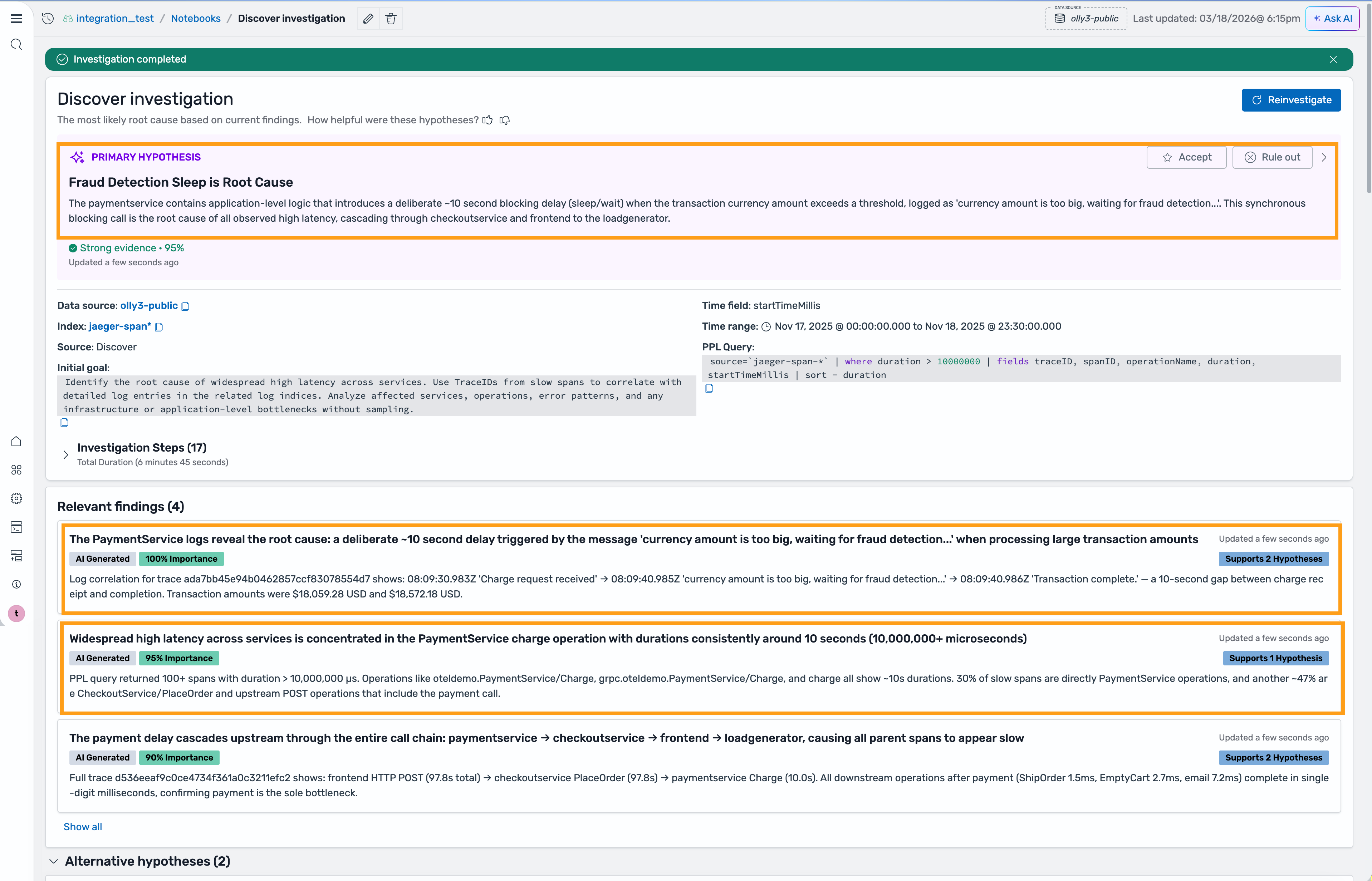
Sie können die Ergebnisse jeder Hypothese überprüfen und dann „Akzeptieren“ wählen, um die Hypothese zu bestätigen, oder „Ausschließen“, um sie zurückzuweisen. Alternative Hypothesen mit geringerer Wahrscheinlichkeit stehen ebenfalls zur Überprüfung zur Verfügung. Sie können jede alternative Hypothese als endgültige Schlussfolgerung wählen, wenn sie Ihrer Einschätzung besser entspricht.
Erneute Untersuchung
Wenn die Untersuchungsergebnisse genauer geklärt werden müssen oder wenn der Ermittlungsbeauftragte feststellt, dass die Untersuchungsfrage anhand der verfügbaren Datensätze nicht beantwortet werden kann, können Sie die Option Erneut untersuchen verwenden, um die Untersuchung anzupassen und erneut durchzuführen. Wählen Sie Erneut untersuchen, um das ursprüngliche Ziel zu bearbeiten, den Zeitraum anzupassen und optional die vorhandenen Hypothesen und Ergebnisse in die neue Untersuchung einzubeziehen.

